Is a 200-Hour Yoga Teacher Training Worth It? An Honest Answer After 18 Years of Teaching
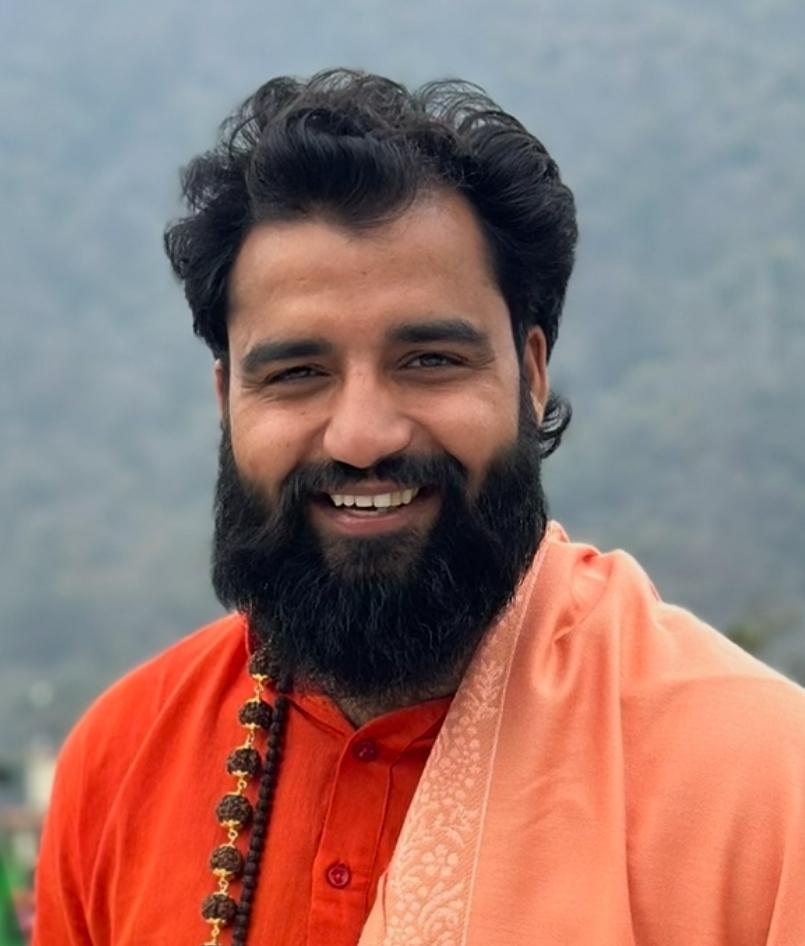
By Yogi Arya
Founder, Arya Yog Peeth · 18+ years teachingUpdated July 2026
People often write to me asking the same question in different words: is a 200-hour yoga teacher training actually worth it? It is a fair question. A training costs real money — in 2026, 200-hour trainings in Rishikesh typically range from around $800 to $3,000+ — and it costs something rarer: a full month of your life.
I have been teaching for more than 18 years and have trained over 5,000 students from around the world. I have watched skeptics arrive and leave transformed, and I have also met people who, honestly, should not have come yet. So my answer is not yes or no. It is: worth it for whom, and for what?
What follows is the answer I give students who write to me privately, with nothing softened. If you finish reading and decide a YTT is not for you right now, that is a good outcome too.
Is Yoga Teacher Training Worth It? Start With What You Are Actually Buying
Read any forum thread on this question and you will find two camps: 'best decision of my life' and 'waste of money.' Both are telling the truth. They bought different things.
If you are buying a guaranteed teaching career, you will likely be disappointed — no certificate anywhere delivers that. If you are buying a month of disciplined daily practice, serious study, a recognized credential, and a foundation you can build on for decades, a good training is some of the best money you will ever spend.
Decide which buyer you are before you compare a single school. It changes how you evaluate everything else on this page.
What a 200-Hour Yoga Teacher Training Actually Gives You
Four real things, in my experience:
- Skill. Sequencing, alignment, functional anatomy, cueing, and — most importantly — supervised hours actually teaching other humans. The craft of standing in front of a room is learnable, and this is where you learn it.
- Depth of personal practice. Twenty-eight days of daily asana, pranayama, meditation, and philosophy does something that years of two-drop-in-classes-a-week cannot. This is the part nobody can ever take from you.
- A credential. A Yoga Alliance-recognized 200-hour certificate is the de facto entry ticket to teaching: it is what insurers and studios ask for. It is a floor, not a ceiling — but you need the floor.
- Community. You live, eat, and struggle alongside your group for a month. At Arya Yog Peeth we cap batches at 12 students — many Rishikesh schools run 15 to 30 per batch — and I insist on this because the attention you receive, and the closeness of the group, are completely different at 12.
What a 200-Hour YTT Does Not Give You
It does not give you an income. The certificate qualifies you to begin; it does not entitle you to students. Anyone who implies otherwise is selling, not teaching.
It does not give you mastery. Two hundred hours is a learner's permit. After 18 years I still consider myself a student.
It does not give you enlightenment. A month of immersion can genuinely open a door — I have watched it happen many times — but walking through that door takes years of practice afterward. Be suspicious of any school that promises awakening on a 28-day schedule.
Who Should Not Do a Yoga Teacher Training Yet
Some people should wait, and I would rather tell you here than after you have paid a deposit.
Do not come if you are chasing a quick career fix — quitting a job you hate and expecting the certificate to replace your income within months. It will not. Come anyway if you wish, but plan a slow transition, not an escape.
Do not come expecting to leave doing advanced asana. A 200-hour training will not give you a press handstand or a deep backbend; that is separate, specific work. This is exactly why we run short intensives — a 3-day handstand intensive from $60 and a 5-day backbend intensive from $70 — because asana skill is its own project, not a side effect of a teaching certificate.
And do not come if you cannot commit to the intensity: long, full days of practice and study, in a vegetarian, alcohol-free holy town, with limited downtime. If this month cannot have your full attention, postpone. The training will still be here.
Can You Make a Living Teaching Yoga? The Honest Economics
Here is what the brochures will not tell you: most new teachers teach part-time first. A community class, some cover shifts, one or two weekly slots — while keeping other income. Building to full-time typically takes years of consistent teaching, and full-time almost always means a mix: group classes, privates, workshops, eventually retreats or trainings. Almost nobody lives on studio classes alone.
I will not quote you a per-class pay figure, because it varies so much by country and city that any number would be wrong where you live. Ask teachers in your own town — they will tell you.
What I can tell you is that where you train changes the math. Our 28-day Hatha Vinyasa YTT is $999 in a shared room, all-inclusive — accommodation, three vegetarian meals a day plus snacks, manuals, mats and props, excursions, even an Ayurvedic massage and a shatkarma cleansing kit. That is often less than tuition alone elsewhere, before room and board. A lower cost means the credential does not need to 'pay itself back' quickly — and that removes desperation from your first year of teaching, which your future students will feel.
The Happiest Students Often Have No Plan to Teach
Plenty of people take a 200-hour training with no intention of ever teaching a class. In my experience they are often the happiest people in the room. They carry no performance anxiety, no career pressure — they simply absorb.
The truth is that a 200-hour YTT is a structured deep-dive into your own practice, with teaching skills attached. If the only body you ever teach is your own, not one of those hours is wasted. If 'I don't even want to teach' is your hesitation, it is not a reason to stay home.
Why Doing Your YTT in Rishikesh, India Changes the Experience
Three things change when you train here, and only one of them is money.
Immersion. A residential month in a holy town on the banks of the Ganga — vegetarian, alcohol-free, built around practice — removes the friction of ordinary life. You are not squeezing sadhana between commutes; you are living inside it.
Tradition. You study yoga inside the culture that produced it, ideally within a lineage. I teach in the lineage of Swami Satyananda Saraswati, a disciple of Swami Sivananda, with advanced training at the Bihar School of Yoga and the B.K.S. Iyengar Institute in Pune. A lineage means the method has been tested across generations — not assembled from weekend workshops.
Cost. The all-inclusive economics above simply do not exist in most Western cities.
Practically, it is easier than people fear: Dehradun's Jolly Grant Airport (DED) is roughly 20 km away — about a 45-minute taxi — Delhi is 5-7 hours by road, and most nationalities can get an Indian e-Tourist Visa online. Weather-wise, January to April is the sweet spot: cool and sunny, 10-25°C. Our YTT batches begin in January 2027, with Hatha Vinyasa running monthly through the year.
How to Judge Whether a Yoga Teacher Training Is Worth the Money
Do not judge a school by its Instagram. Judge it by the answers it puts in writing. Here is the checklist I would use if I were choosing today:
A school that is vague about any of these in writing will be vague in person. For clarity on our own terms: we take a $300 non-refundable deposit that counts toward your fee, with the balance due before the course starts — and you should expect any serious school to state its terms this plainly.
| What to check | What a good answer looks like |
|---|---|
| Batch size | A specific number, in writing. Twelve students is a different training from twenty-five. |
| Who actually teaches | The lead teacher's real hours in your classroom — not a famous name who appears twice. |
| Curriculum beyond asana | Substantial pranayama, meditation, philosophy, and anatomy — not asana with garnish. |
| Practice teaching | You teach real classes to real people, with feedback, before you graduate. |
| Money terms | Exactly what is included, deposit and refund terms stated plainly upfront. |
| Alumni | The school will connect you with past students you can question freely. |
The Honest Takeaway
After 18 years, here is my honest summary. A 200-hour yoga teacher training is worth it if you are buying a month of disciplined practice, real study, and a foundation — whether or not you ever teach. It is not worth it if you are buying a job, mastery, or a shortcut to awakening; no honest school sells those. If you are ready for the intensity, come train where yoga lives. Our next batches begin in January 2027, twelve seats each — and if that timing feels too far away, good: use the months between now and then to practice. That is the best preparation there is.
Yogi Arya
Frequently Asked Questions
Can a complete beginner do a 200-hour yoga teacher training?
Yes. Our 200-Hour Hatha Vinyasa YTT is designed for beginner-to-intermediate students, and that is normal across the industry. I do suggest six months or so of some regular practice first, simply so the daily schedule is not a shock. But hear this clearly: consistency matters more than flexibility. In my experience, students who arrive stiff often become careful, honest teachers, because they have to learn technique instead of relying on a bendy body.
Can you really teach yoga after a 200-hour training?
Yes — and you should be honest about what kind of teacher you are. A good 200-hour training prepares you to teach a safe, well-sequenced beginner class, and in most places it qualifies you for insurance and studio work. It does not make you experienced. Your first hundred classes taught are your second training. Start with community classes, friends, small groups. Teach a lot. That is how everyone I respect became good.
Is an online yoga teacher training as good as in-person?
Online trainings are cheaper and flexible, and for continuing education they can work well. But for your foundation, you lose the things that matter most: live feedback while you teach, an experienced eye on your alignment, hands-on adjustments, and the immersion of practicing daily with a group. If your goal is to teach real people in a real room, do your 200 hours in person. I am biased, but I am also right about this one.
What comes after a 200-hour yoga teacher training?
First: teach and keep practicing for at least a year. Do not stack certificates. After that, most teachers either take a 300-hour advanced training or specialize. Some choose to deepen the practice itself rather than the credential — that is why we offer a 200-Hour Hatha & Kriya Yoga YTT ($1,333 shared), an intermediate-to-advanced training in classical Kriya in the Satyananda / Bihar School of Yoga tradition (not the Kundalini taught in the West), running February, March, November, and December 2027.
Have a question this guide didn't answer?
Message us on WhatsApp or email — we reply within 24-48 hours, and we'll answer honestly even if the answer is that we're not the right school for you.
Ask Us Anything