How to Choose a Yoga School in Rishikesh (Without Regretting It)
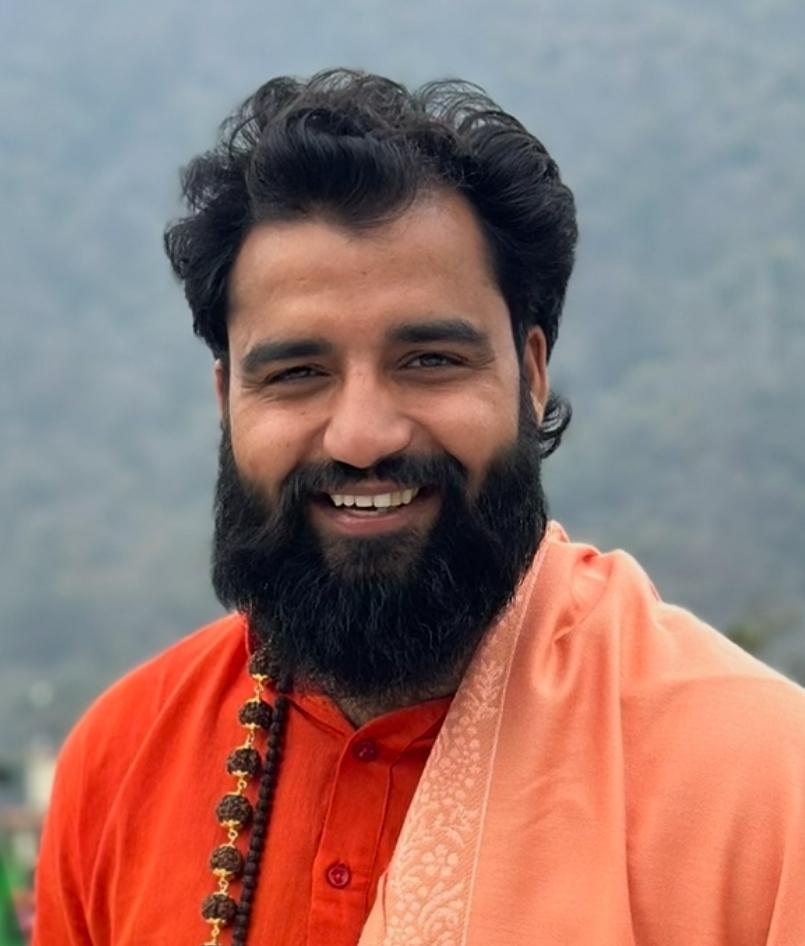
By Yogi Arya
Founder, Arya Yog Peeth · 18+ years teachingUpdated July 2026
People often write to me asking the same question in different words: how do I know which yoga school in Rishikesh is genuine? After 18+ years of teaching and more than 5,000 students, I have also heard the sadder version of that question — from people who arrived here having already paid for a training that was nothing like its website.
This guide is the advice I would give a friend. I run a school myself — Arya Yog Peeth, in Ram Jhula — so read me with healthy skepticism and check everything I say against other sources. But most of what follows will work against any school that cannot answer plainly, including mine. That is the point.
There is no single "best yoga school in Rishikesh." There is only the school that is right for you, and a short list of questions that separates honest schools from marketing operations.
9 Questions to Ask Any Yoga School Before You Pay
Send these by email so you have the answers in writing. A sincere school will answer all nine without irritation. Evasion on any one of them tells you something.
- Who exactly will teach me, and where did they train? Ask for names, not photos. Photos are the cheapest thing on a website. You want each teacher's lineage, years of experience, and where they studied — real institutions you can look up.
- How many students are in my batch? Get a number, not "small groups." We cap every batch at 12. Many schools in Rishikesh run 15 to 30 students per batch, and the difference changes everything about your training (more on this below).
- What exactly does "all-inclusive" include? Ask for an itemized list: accommodation, how many meals per day, mats and props, manuals, excursions, cleansing kits, wifi. "All-inclusive" with three hidden extras is not all-inclusive.
- What are the deposit and payment terms, in writing? Ours: a $300 USD deposit, non-refundable, which counts fully toward the course fee, with the balance due before the course begins. Whatever a school's terms are, they should be this specific — before you pay, not after.
- Is the school Yoga Alliance registered? Ask directly, and verify it yourself rather than trusting a logo pasted on a homepage.
- What do reviews say across platforms — not just the school's own site? Read Google, YouTube, booking directories, and social media. One glowing platform and silence everywhere else is a pattern worth noticing.
- How old are the reviews? A school can change completely in two years. Teachers leave; owners change. Fifty wonderful reviews from 2021 tell you about 2021.
- What does the daily schedule actually look like, hour by hour? A real 200-hour training is demanding: early mornings, philosophy, anatomy, teaching practice — not two asana classes and free time. If the school cannot produce a concrete schedule, the curriculum may not exist yet.
- Will the teachers on the website actually teach my batch? This is the question almost nobody asks. Some schools advertise senior teachers who appear once for a photo session. Ask plainly: "Will this person teach my dates?"
Red Flags: When to Walk Away from a Yoga School
Some warning signs are so consistent that I will state them bluntly. In 2026, 200-hour trainings in Rishikesh typically range from around $800 to $3,000+ all-inclusive. A 28-day course that includes a private room, three meals a day, materials, and certification for dramatically less than the bottom of that range has to save the money somewhere — usually in teacher salaries, food quality, or batch sizes of 25+.
Beyond price, walk away from: websites built on stock photos with no identifiable teachers or real classroom images; schools that cannot name a single teacher; pressure tactics — "only 2 seats left!" that mysteriously renews every week, or discounts that expire tonight; and any school that will not put its refund and payment terms in writing. Genuine scarcity exists — small schools do fill up — but a school that manufactures urgency to stop you thinking will cut other corners too.
Why Batch Size Matters More Than a Famous Name
Here is the arithmetic nobody puts on their homepage. In a two-hour asana class, a teacher who gives each student individual attention and hands-on adjustment can genuinely serve perhaps a dozen people. With 25 or 30 students, you are not in a teacher training — you are in a large drop-in class that happens to end with a certificate. Your alignment errors go uncorrected for 28 days, and you will teach them to your own future students.
This is why we cap batches at 12 at Arya Yog Peeth, and it is also the honest reason small-batch trainings cost more per student: the school earns less per teacher-hour. When you compare prices, divide the fee by the attention you will actually receive. A famous name with 30 students in the room is often a worse deal than an unknown teacher with 10.
So when a school says "small groups," ask for the maximum number and ask what happens if the batch is oversubscribed. A number in writing is a commitment. An adjective is not.
Why Lineage Matters — and the Questions That Expose It
Lineage is not snobbery. It means the method you are learning existed before the marketing department did — a syllabus tested on thousands of students over decades, with a living chain of teachers who can correct each other. My own training is in the lineage of Swami Satyananda Saraswati, a disciple of Swami Sivananda, with advanced study at the Bihar School of Yoga and the B.K.S. Iyengar Institute in Pune. I tell you this not to impress you, but because you can verify every part of it — and that is exactly what lineage should let you do.
Two questions expose lineage instantly. First: "Whose method do you teach, and who taught it to you?" A genuine teacher answers in seconds, with names and places. Vague answers — "traditional yoga," "ancient Himalayan style" — with no teachers or institutions attached are a synthetic tradition invented for the brochure. Second: "What texts and practices does your syllabus come from?" A lineage-based school can point to specific sources; an improvised one cannot.
One caution from my own corner of the tradition: if a school offers "Kriya Yoga" or "Kundalini," ask which tradition they mean. Classical Kriya in the Satyananda tradition — which is what we teach — is a precise, systematic practice and is not the same as Kundalini as it is commonly taught in the West. It is also not for beginners; our own Hatha & Kriya YTT is intermediate-to-advanced — if you are newer to practice, a Hatha training is the right first step. A school that sells you an advanced practice without asking about your experience is selling, not teaching.
What Fair Pricing and Terms Look Like in 2026
You cannot judge a price without knowing what it buys. Here is what a transparent offer should itemize, using our own 200-Hour Hatha Vinyasa YTT ($999 shared / $1,299 private, 28 days) as one worked example — not because our numbers are the only fair ones, but because every school should be able to fill in this table for you.
Discounts are also a transparency test. Legitimate ones are structural and published — for example, we offer 5% for booking 12 months ahead, 5% for groups of 3+, and 5% for full payment at booking. A discount invented on the spot to close you today is a pressure tactic wearing a gift bow.
| Item | What to ask any school | Included in our 200-Hour Hatha YTT |
|---|---|---|
| Accommodation | Shared or private? On campus? | Yes — both options, priced separately |
| Food | How many meals? Vegetarian? | 3 vegetarian meals daily + snacks |
| Materials | Mats, props, manuals extra? | All included |
| Extras | Excursions? Treatments? | Excursions, 1 Ayurvedic massage, shatkarma cleansing kit, wifi |
| Certification | Yoga Alliance registered? | Yes |
| Deposit | Amount? Refundable? Counts toward fee? | $300, non-refundable, counts toward fee |
A Fair Word: Rishikesh Has Many Sincere Schools
I would be lying if I told you my school is right for everyone. Some students thrive in the busy café-lined lanes on the Tapovan side of town; we are in Ram Jhula, the quieter Swargashram side near Bhootnath Temple, on the banks of the Ganga — wonderful for depth, wrong for someone who wants nightlife-adjacent energy (though note: all of Rishikesh is a vegetarian, alcohol-free holy town). Some students want a fitness-forward vinyasa style; our roots are classical. Some want to start immediately; our next YTT batches begin January 2027, because 2026 is fully booked with retreats — if your dates cannot wait, we are simply not your school this year.
Rishikesh has many sincere teachers running honest schools alongside the marketing operations. The nine questions above will find them. A good school does not fear your questions — it is quietly relieved you asked them.
The Honest Takeaway
If you remember one thing from this guide, let it be this: get everything in writing, and speak to an actual teacher — not a sales manager — before you pay anyone a deposit, including us. A month of your life and your future teaching foundation deserve a week of careful emails. If those emails lead you to Arya Yog Peeth, I will be glad to meet you in Ram Jhula. If they lead you to another sincere school that fits you better, then this article did its job just as well.
Yogi Arya
Frequently Asked Questions
Does Yoga Alliance certification actually matter?
Honestly: it is a registry, not a quality guarantee. Registration confirms a school submitted a syllabus meeting minimum hour requirements — it does not measure teaching quality. It matters practically if you plan to teach abroad, since many studios and insurers ask for it. Arya Yog Peeth is Yoga Alliance registered, but I would never advise choosing a school on that logo alone. Use it as a filter, not a decision.
Are cheap yoga teacher trainings in Rishikesh bad?
Not automatically — India's costs genuinely allow good trainings at prices that surprise Western students. But do the arithmetic: 28 days of accommodation, three daily meals, qualified teachers, and materials has a real cost floor. When a price sits far below the typical 2026 range of roughly $800 to $3,000+, the savings usually come from 25-30 student batches or underpaid junior teachers. Cheap is fine; impossible is a warning.
Should I visit a school or try a class before enrolling in a YTT?
If you can, absolutely. Three days on the ground tells you more than three hundred reviews. Many schools, including ours, run short formats that work as a low-risk trial — we offer a 3-day handstand intensive from $60 and a 5-day backbend intensive from $70, plus 10-day retreats. If a school refuses to let you see a real class or meet a teacher before you commit, ask yourself why.
Are city-center schools better than quieter areas like Ram Jhula?
Neither is better; they suit different people. The busier Tapovan side offers cafés, shops, and social energy between classes. Ram Jhula (Swargashram), where we are based, is quieter and closer to the traditional ashram atmosphere along the Ganga — better for students who want fewer distractions during an intense 28 days. Remember that all of Rishikesh is a vegetarian, alcohol-free holy town, so nowhere here is a party destination. Choose the environment your practice needs, not the one Instagram prefers.
Have a question this guide didn't answer?
Message us on WhatsApp or email — we reply within 24-48 hours, and we'll answer honestly even if the answer is that we're not the right school for you.
Ask Us Anything