Kriya Yoga vs Kundalini Yoga: What's the Difference?
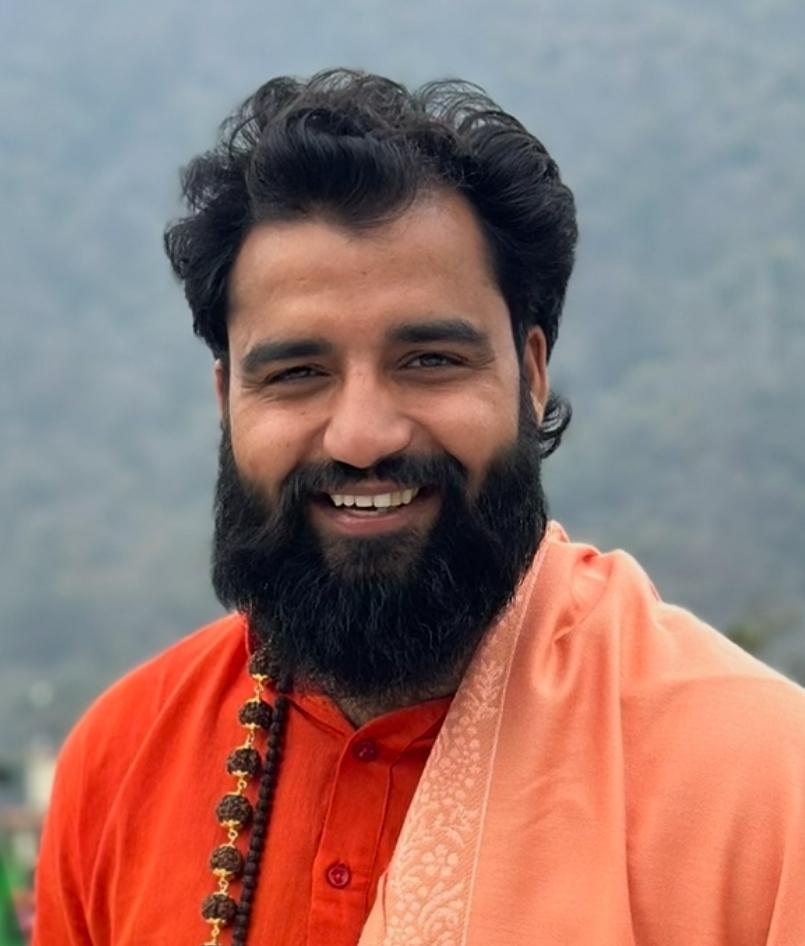
By Yogi Arya
Founder, Arya Yog Peeth · 18+ years teachingUpdated July 2026
Again and again, students write to me asking about our Kriya Yoga teacher training and then describe Breath of Fire, white turbans, and dynamic chanting classes. They are describing Kundalini Yoga as it is taught in the West. It is a real practice with real value — but it is not what I teach, and it is not what classical Kriya Yoga is.
The confusion is not the student's fault. Google mixes the two terms together, both traditions use the word 'kriya', and both speak about kundalini. Even the foundational textbook of my own lineage — Swami Satyananda's manual on these practices — is titled 'Kundalini Tantra'. You can see how the tangle happened.
I have taught for over 18 years in the lineage of Swami Satyananda Saraswati, who was a direct disciple of Swami Sivananda of Rishikesh. Let me untangle these two systems honestly, including who each one is genuinely for — because one of them is probably not for you, and I would rather tell you that now than after you have paid for a course.
What is Kriya Yoga?
The Sanskrit word kriya means 'action' or 'movement'. Classical Kriya Yoga is a precise sequence of internal practices — each kriya combines pranayama (breath control), mudra (psychic gesture), bandha (energy lock), mantra, and the rotation of awareness through specific centres along the spine. You practise the kriyas in a fixed order, one flowing into the next, mostly seated and outwardly still.
In the Satyananda tradition, the kriyas are taught progressively over a long period, and only after a student has built a foundation: steadiness in a seated posture, competence in nadi shodhana (alternate-nostril breathing) with counted ratios, familiarity with the main bandhas, and the tongue lock called khechari mudra. Without those prerequisites, the kriyas simply do not work as designed.
Here is the part most articles miss: Kriya Yoga does not ask you to concentrate or force the mind to be still. That is its genius. The practices keep the body and breath so systematically occupied that awareness expands on its own. For people who have tried seated meditation and found their mind rebelling, this is often the door that finally opens.
One honest complication: 'Kriya Yoga' also names the lineage of Lahiri Mahasaya, made world-famous by Paramahansa Yogananda's 'Autobiography of a Yogi'. That is a related but distinct transmission with its own initiation structure. In this article I am describing the Kriya Yoga of my lineage — Sivananda to Satyananda to the Bihar School of Yoga.
What is Kundalini Yoga as taught in the West?
When most Western students say 'Kundalini Yoga', they mean the style popularised from 1969 onward by Yogi Bhajan through his 3HO organisation. It is dynamic and communal: rapid repetitive movements, Breath of Fire (fast diaphragmatic pumping), long chanting in Gurmukhi, group energy, often white clothing and head coverings.
Confusingly, that system also calls its practice sets 'kriyas' — a class might feature a '40-day kriya for the navel centre'. Same word, very different practice. A Western Kundalini kriya is typically a vigorous, sweat-producing sequence done to a timer; a classical Kriya in my lineage is a slow, internal, largely motionless technique.
I say this without disrespect. Western Kundalini Yoga gives many people a devotional, energising, emotionally cathartic practice, and its group format carries people who would never sustain a solitary discipline. But it is a 20th-century synthesis built for Western group classes. Classical Kriya is an older, quieter, more individual path.
Kriya Yoga vs Kundalini Yoga: comparison table
The table below is a simplification — every tradition has depth the boxes cannot hold — but it captures the practical differences a student actually feels on the mat.
| Classical Kriya Yoga (Satyananda / Bihar School) | Kundalini Yoga (Western style) | |
|---|---|---|
| Origin / lineage | Tantric practices systematised by Swami Satyananda Saraswati, disciple of Swami Sivananda of Rishikesh | Popularised in the USA from 1969 by Yogi Bhajan (3HO) |
| Style of practice | Seated, internal, mostly still; pranayama + mudra + bandha + rotation of awareness | Dynamic movement sets, chanting, music, group energy |
| Pace | Slow and deliberate; one kriya flows into the next over 60–90 minutes | Brisk to intense; timed repetitive exercises |
| Breath techniques | Ujjayi with khechari mudra, nadi shodhana ratios, controlled retention with bandhas | Breath of Fire, long deep breathing, segmented breaths |
| Goal | Systematic expansion of awareness leading toward meditation; awakening unfolds gradually as a by-product | Energising and 'raising' kundalini actively; vitality, catharsis, devotion |
| Who it suits | Established practitioners (roughly 1–2 years of steady practice) who want meditative depth | Beginners welcome; people who thrive on movement, music and community |
Why does Google confuse Kriya Yoga with Kundalini Yoga?
Three reasons, all historical. First, the shared vocabulary: both systems use 'kriya' for their core practices, and both discuss kundalini — the dormant spiritual energy described in tantric texts.
Second, the book titles. Swami Satyananda founded the Bihar School of Yoga in Munger in 1963, and his definitive manual on Kriya Yoga is titled 'Kundalini Tantra'. Anyone searching either term lands on overlapping material, and search engines have blended the two ever since.
Third, the lineages crossed the world at the same time. Yogananda carried his Kriya to America in the 1920s; Yogi Bhajan launched Western Kundalini Yoga in 1969; Satyananda's books spread globally through the 1970s and 80s. Three streams, two shared words, one very confused search results page.
My own root is clear and I teach nothing outside it: Swami Sivananda of Rishikesh trained Swami Satyananda, who systematised the Kriya Yoga I transmit. I did my advanced training at the Bihar School of Yoga itself, and later at the B.K.S. Iyengar Institute in Pune for precision in asana. When we say our 200-Hour Hatha & Kriya Yoga YTT teaches classical Kriya, this unbroken line is what we mean — not Kundalini Yoga as taught in the West.
What does a classical Kriya Yoga session actually look like?
From the outside, almost nothing appears to happen. A session in my tradition runs 60 to 90 minutes, most of it seated. There is no music, no sweating, no flowing sequences. Internally, it is one of the most demanding practices I know.
We begin with preparation: a few loosening movements, then nadi shodhana to balance the breath, then ujjayi breathing with khechari mudra — the tongue folded back against the palate — which becomes the carrier for everything that follows.
Then the kriyas themselves, in fixed order. Awareness travels a precise route: up the frontal passage and down the spinal passage of the body, pausing at the chakra kshetram — the trigger points for each energy centre. Specific kriyas add mudras such as vipareeta karani, and bandhas — moola bandha at the perineum, uddiyana at the abdomen — coordinated exactly with inhalation, retention, or exhalation. Get the coordination wrong and the kriya is just gymnastics of attention; get it right and the effect is unmistakable.
Every session closes with antar mouna — 'inner silence' — the Satyananda meditation in which you first witness the mind's chatter without resisting it, then learn to dispose of thoughts at will. Kriya without this meditative completion is a car without a destination.
Is Kriya Yoga safe? Why a qualified teacher matters
Practised in the traditional sequence, under guidance, with the prerequisites in place — yes, Kriya is safe. But I will not pretend the sequence is decoration. These techniques combine breath retention with bandhas and concentrated awareness, and they genuinely move energy. Taken out of order, rushed, or self-taught from a book, they can leave a practitioner agitated, sleepless, or emotionally raw. It is not rare to meet practitioners in Rishikesh in exactly that state, and unwinding it takes patience.
This is why the tradition gates the practices, and why we structure our training the way we do. Our 200-Hour Hatha & Kriya Yoga YTT runs 21 days, and I want to be precise about what those days are, because course length is the easiest thing for a school to boast about and the least honest. Twenty-one days here is not a shortened course. It is a course that does not spend its first week teaching you how to sit, how to breathe, how to hold a posture without fighting it — because we ask you to arrive already able to do those things. That is what the intermediate-to-advanced grading is actually for. The prerequisite buys back the time, and every day of it goes into the kriyas.
What we do not shorten is the watching. We cap every batch at 12 students, when many schools in Rishikesh run 15 to 30, because in Kriya the teacher has to see each student's breath, posture, and state every single morning — a practice that moves energy is not safe to teach to a room you cannot actually see. If you find a school offering these kriyas to thirty people at once, the number that should worry you is thirty, whatever it says about the calendar. I overcame ulcerative colitis at fifteen through yoga and Ayurveda after conventional treatment failed; I know from the inside that these tools are powerful, which is precisely why I refuse to hand them out carelessly.
Which should you learn: Kriya Yoga or Kundalini Yoga?
Choose Western Kundalini Yoga if you are drawn to movement, music, chanting, and group energy, or if you are starting from zero and want an accessible, uplifting entry point. It would be dishonest of me to steer such a student toward classical Kriya — you would likely find it dry for the first months, and dryness kills practice faster than difficulty does.
Choose classical Kriya if you already have a steady practice — roughly one to two years — and you want a systematic, quiet, inward path into meditation. If seated meditation has always defeated you, Kriya's structured, technique-rich approach is often the answer.
If Kriya calls you but you are not yet ready, do not force it. Our 200-Hour Hatha Vinyasa YTT ($999 shared room, $1,299 private, all-inclusive, running monthly through 2027) is the honest foundation: it builds exactly the asana steadiness and pranayama competence that Kriya presumes. Our 200-Hour Hatha & Kriya Yoga YTT ($1,333 shared, $1,499 private, 21 days) runs in February, March, November, and December 2027 — our first batches begin January 2027, as 2026 is fully booked with retreats. Booking is a $300 non-refundable deposit that counts toward the fee, and we offer 5% off for booking 12 months ahead, for groups of three or more, or for paying in full at booking.
The Honest Takeaway
If you take one thing from this article, take this: Kundalini Yoga as taught in the West is a dynamic, communal, 20th-century practice built around movement and chanting; classical Kriya Yoga is a quiet, internal, tightly sequenced discipline from the tantric tradition, carried in my case through Swami Sivananda and Swami Satyananda. Neither is 'better' — but they are for different students at different stages, and enrolling in one while wanting the other wastes your time and money. If you are unsure which you are ready for, write to me and describe your current practice honestly. I will tell you plainly, even if the answer is 'not our Kriya course yet' — that honesty costs me a booking sometimes, but it is how yoga should be taught.
Yogi Arya
Frequently Asked Questions
Is Kriya Yoga dangerous?
Not when learned properly. The risk comes from skipping the traditional sequence — attempting advanced kriyas with breath retention and bandhas before the foundations are in place, usually from books or videos. Done that way, the practices can cause restlessness, insomnia, or emotional turbulence. Learned progressively from a qualified teacher in a lineage, Kriya is a gradual, stable path. The tradition's grading exists for safety, not gatekeeping.
Can beginners practice Kriya Yoga?
Complete beginners can practise the preparations — nadi shodhana, basic ujjayi, simple awareness rotations — and should. But the kriyas proper assume a steady seated posture, competent pranayama, and familiarity with bandhas, which realistically takes one to two years of regular practice. That is why our Hatha & Kriya YTT is intermediate-to-advanced, and why I point new students to our Hatha Vinyasa training first.
Is Kundalini awakening the goal of Kriya Yoga?
Not in the way social media portrays it. In the Satyananda tradition, the goal is the systematic expansion of awareness; any awakening of kundalini is a gradual by-product of prepared body and mind, not an event we chase. We deliberately do not force it — a dramatic awakening in an unprepared system is exactly what the graded sequence is designed to prevent. Slow and integrated beats fast and destabilising, every time.
Do you need initiation to practice Kriya Yoga?
It depends on the lineage. In Yogananda's line, Kriya is transmitted through formal initiation. In the Satyananda / Bihar School tradition I teach, the kriyas are taught openly but progressively — the 'gate' is preparation and guided instruction rather than a secret ceremony. What you genuinely need is a teacher who has practised the kriyas themselves and can watch you learn them. That transmission, not paperwork, is the real initiation.
Have a question this guide didn't answer?
Message us on WhatsApp or email — we reply within 24-48 hours, and we'll answer honestly even if the answer is that we're not the right school for you.
Ask Us Anything